Education
with D-2, Career with E-7, Opportunities with H-1 & SSW in Korea
South Korea is known for its advanced technology and
K- culture. Thousands of Nepali and international students choose Korea every
year for education, work and k-pop related fields. It is facing labor
shortages through structured programs like the EPS which
has created strong demand for foreign worker especially from Nepal, the
Philippines, Vietnam, and other Asian countries.
1.
Overview: Korea–Nepal Academic Relations
South Korea and
Nepal share strong diplomatic and educational ties. Thousands of Nepali
students study in Korea under language, undergraduate, postgraduate, and
research programs. Korea offers multiple scholarships including GKS,
University-funded, NIIED, and local government scholarships. Korea’s
high-quality education, safe environment, and advanced technology attract many
international students.
2. Why Study in South Korea?
✓
World-Class Education System
Korean universities are consistently ranked among the
best in Asia and the world. Compared to Western countries like USA,/UK/
Australia , Korea offers high-quality education at reasonable costs. South
Korea provides fully funded scholarships that cover tuition, monthly stipend,
and airfare. Degrees from Korean universities are globally respected and over
70% of master’s and many bachelor’s programs taught fully in English.
✓
High Employment Opportunities
Korea has a shortage of skilled workers in IT,
engineering, healthcare, and manufacturing. Students are given permission for
part time job up to 20-25 hours per week.
✓
K- culture & Modern Lifestyle
Korea is known for safety, cleanliness, advanced
transportation, and student-friendly policies. Students enjoy Korean culture
while learning one of the most in-demand global languages from a well knowen
universities of the world.
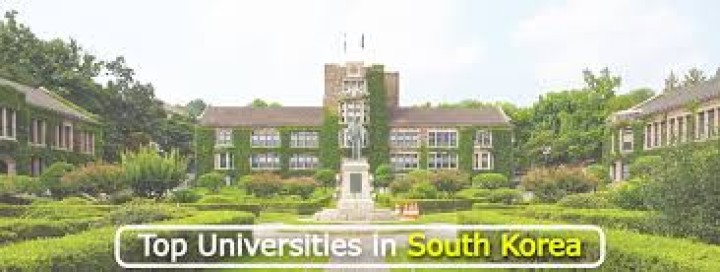
3. Top Universities in South Korea
Leading National Universities
· Seoul
National University (SNU)
· Korea
Advanced Institute of Science & Technology (KAIST)
· Pohang
University of Science & Technology (POSTECH)
· Yonsei
University
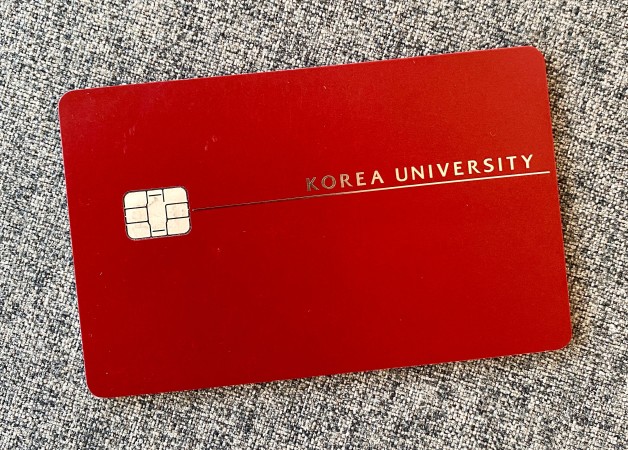
· Korea
University
· Sungkyunkwan
University (SKKU)
Renowned
Private Universities
· Hanyang
University
· Ewha
Womans University
· Kyung
Hee University
· Chung-Ang
University
· Sogang
University
4. Popular Courses for International Students
· Engineering
(Mechanical, Electrical, Civil, Chemical, Semiconductor)
· Computer
Science / AI / Data Science
· Business
Administration (BBA/MBA)
· Medicine
(MD), Pharmacy, Nursing
· Media
& Communication / Korean Language & Culture
· Biotechnology
/ Cosmetics Science
· Game
Design & Animation
· International
Studies / Global Korean Studies
· International
Relations
· Arts
& Design (K‑Arts)
5. Tuition Fees in South Korea
1. Korean
Language Institutes: ₩4,000,000 – ₩7,000,000 per year (approx. NPR 3–6 lakh)
2. Public
Universities: ₩6,000,000 – ₩12,000,000 per year (approx. NPR 5–10 lakh)
3. Private
Universities: ₩8,000,000 – ₩16,000,000 per year (approx. NPR 7–14 lakh)
Additional Costs
o
Application fee: ₩50,000 – ₩150,000
o
Health insurance: ₩250,000 – ₩400,000 per
year
o
Dormitory: ₩800,000–2,500,000 per year
6. Scholarships in South Korea
1. Korean
Government Scholarship Program (GKS / KGSP): It is fully funded (airfare +
tuition + ₩1,000,000–1,500,000 monthly stipend ≈ NPR 94,500–141,750) and
contains 20–30 seats reserved annually for Nepal
2. University
Scholarships: Many universities offer 30–100% tuition fee waivers based on academic
merit, TOPIK score, and Research performance
3. Universities
major scholarships: Many universities
like Yonsei, Korea, SKKU, Hanyang, Kyung Hee offer 50–100% tuition waiver +
stipend to top Nepali applicants.
7.
Student Visa Process (D‑2 / D‑4 Visa)
D-2
Visa: It is a full-time degree (e.g., bachelor's, master's,
PhD) at universities/junior colleges. Students are allowed to do part-time (up
to 20 hrs/week after 6 months) or full-time during vacations.
D-4
Visa: It
is a short-term training primarily Korean language courses (D-4-1) at
accredited schools and some vocational/cultural programs (e.g., D-4-7 for
arts). They are not allowed to work and
have to focus on training. Part time work is still possible after 6 months with
permission.
Required
Documents:
· Valid
passport
· Admission
letter from Korean university
· Financial
proof (bank balance ₩20,000,000 ≈ NPR 1,890,000) or scholarship certificate
· Academic
transcripts & certificates
· TB
test certificate (mandatory for Nepali applicants)
· Passport
photos
Application
Process:
· Get
admission in an university
· University
issues admission documents
· Apply
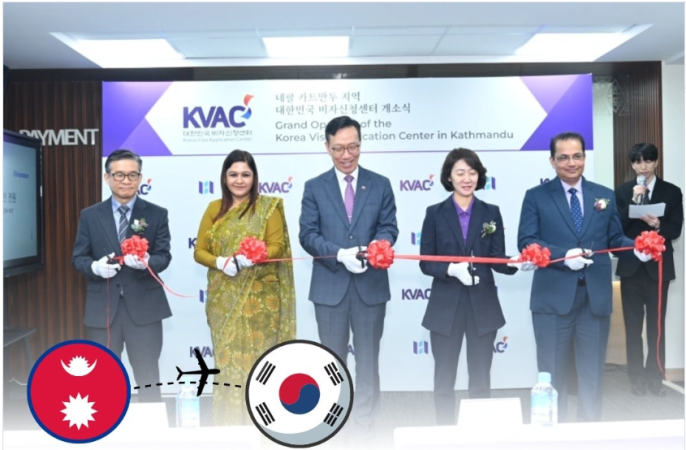
at Korean Embassy in Kathmandu (or VFS Global)
· Give
interview
· Visa
processing takes 2–4 weeks
· Visa
fee is free for GKS otherwise ₩70,000 (NPR 6,600) should be paid
· Korea
offers mainly D‑4 (Language Study) and D‑2 (University Degree) visas.
· Fly
to South Korea & Complete Registration
8. Cost of Living in South Korea
1. Accommodation:
₩250,000 – ₩600,000
2. Food:
₩200,000 – ₩400,000
3. Transport:
₩50,000 – ₩70,000
4. Utilities
& Internet: ₩50,000 – ₩100,000
5. Miscellaneous:
₩50,000 – ₩150,000
Total: ₩600,000 – ₩1,300,000 per month (approx. NPR
55,000 – 1,20,000)
9. Benefits of Studying in South Korea
i.
Korea offers a degree recognized
worldwide.
ii.
Korea offers 2-year job search visa after
graduation (D-10).
iii.
It is a safe country with excellent public
transport and advanced healthcare.
iv.
You can learn Korean language for free at
university while experiencing K-pop, K-drama and modern Asian culture.
Why Working in South
Korea?
·
Competitive Salaries
Minimum wage ₩10,030/hour (~NPR 945/month at 209 hours) average ₩4.25
million/month (NPR 402,000) with bonuses and overtime and has high savings (NPR
100,000+/month).
·
Labor Protections
EPS ensures contracts, health insurance, and dispute resolution via HRD Korea
with no illegal fees.
·
Support Programs
Free pre-departure training, adaptation orientation, and embassy assistance and
allows family reunification possible after 2 years.
·
Cultural and Lifestyle
Benefits
Safe, efficient society with K-culture, high-speed internet, and work-life
balance (40-hour weeks).
1.
Types of Work Visas in South Korea
A. E-9 Visa
(Non-Professional Employment Permit)
Most popular
work visa for Nepali citizens for semi-skilled roles under EPS in 16 sectors.
With a 3 years visa for initial phase but allows stay up to 4 years and 10
months. It requires passing EPS‑TOPIK language exam. The worker cannot bring
his family there and they are not eligible for permanent residency. Manufacturing,
agriculture, fisheries are some of the E-9 works.
B. E-7 Visa (Specially Designated Professions)
It is for skilled professionals with 1–3 years
renewable visa. It requires language/skill tests. The job holder can bring their family to Korea
after fulfilling certain conditions and they can also apply for permanent
residency in Korea. Examples: IT engineers, translators, managers.
C. E-6 Visa (Arts,
Culture & Entertainment)
It
is limited visa for Nepalese applicants which is only given to performers,
entertainers’ nand artist for a short interval of time.
D. E-4 Visa (Technical Training)
It
provides entry-level training (up to 1 year) to provide instruction, training,
or technical services to public or private organizations.Examples: Vocational
skills in tech or trades.
2.
In-Demand Sectors and Top Employers
·
Manufacturing:
Assembly, electronics
employers: Samsung, Hyundai, LG.
Average
Salary: ₩3.5–5 million/month (NPR 331,000–473,000).
·
IT/Tech:
Software, AI, cybersecurity
employers: Naver, Kakao, SK Hynix.
Average
Salary: ₩6–10 million/month (NPR 567,000–945,000).
·
Agriculture/Livestock:
Farming, processing foods.
employers: Rural co-ops.
Average
Salary: ₩3–4.5 million/month (NPR 284,000–426,000).
·
Shipbuilding/Construction:
wielding, site work
employers:
Daewoo Shipbuilding, POSCO.
Average:
₩3.2–4.8 million/month (NPR 302,000–453,000).
·
Services/Caregiving:
Hospitality, elderly care
employers: Hotels, care facilities.
Average
Salary: ₩2.8–4 million/month (NPR 265,000–378,000).
3. Salary
Structure in South Korea
Minimum
Wage (2025)
- ₩10,300 per hour
- Monthly salary
(average): ₩2,200,000 –
₩2,800,000
Skilled
Workers (E-7)
- ₩2,500,000 –
₩4,500,000 per month
- Certain technical
jobs can earn more with overtime
Overtime
Pay
- 1.5 times the
normal hourly rate
Additional
Benefits
- Free
accommodation in some companies
- Free meals in
manufacturing companies
- Bonuses and
insurance benefits
4.
Application Fees and Costs
·
EPS Language Test:
₩50,000–70,000 (NPR 4,700–6,600), skill test ₩30,000 (NPR 2,800).
·
Visa Issuance (E-9): Free
(sponsor pays), E-7: ₩70,000 (NPR 6,600).
·
TB Screening
(Mandatory for Nepalese): ₩15,000–25,000 (NPR
1,400–2,400).
·
Pre-Departure Training:
agency fee NPR 20,000–50,000 (if E-7).
·
Health
Check/Translation: NPR 5,000–10,000.
Total
initial outlay: NPR 50,000–100,000; recoverable in 1–2
months.
Required Documents
- Valid passport (6+ months).
- EPS-TOPIK score (N4+ for E-9’ higher for E-7).
- Job offer/contract (min. ₩2 million/month or NPR 189,000).
- Skill certificate (sector-specific).
- Health certificate (TB screening mandatory).
- Financial proof (₩10–20 million bank or NPR 945,000–1,890,000 equivalent).
- No criminal records.
Application Process
1. Pass EPS language test (Aug 11–16, 2025 applications; Kathmandu exam); then
skill test (2–3 months).
2. DoFE registers passers and signing contract sent by HRD
Korea.
3. Employer gets visa issuance cert.
4. Apply at Korean Embassy Kathmandu (or VFS); interview on plans/finances.
5. Processing: 2–4 weeks; enter Korea, register within 90 days.
6. Pre-departure orientation (free).
5.
Cost of Living in South Korea
Accommodation: ₩500,000–1,000,000
shared/dorm (NPR 47,000–94,500) per month.
Food: ₩300,000–500,000 (NPR
28,000–47,000).
Transport: ₩60,000–100,000 (NPR
5,700–9,500).
Utilities/Phone:
₩100,000–150,000 (NPR 9,500–14,200).
Miscellaneous (insurance,
leisure): ₩100,000–200,000 (NPR 9,500–18,900).
Total monthly cost: ₩1,060,000–1,950,000 (NPR 100,000–184,000). With
₩2.5 million+ salary, savings NPR 150,000+/month possible.
6. Benefits of Working in South Korea
- Above minimum wages with 20% bonuses and 95% placement via EPS.
- Full protections with free healthcare via NHIS (4.5% payroll).
- Skill training leading to permanent roles with family visa after 2 years.
- Overtime allowed (up to 52 hours/month) including1-year job search extension.
- Remittance is easy due to digital transfers in hours.
Conclusion
South
Korea is one of the fastest‑growing destinations known for its advanced
technology, high‑quality education, and well‑regulated labor market. It offers
excellent opportunities from world‑class universities and scholarship programs
to high‑salary work visas like E‑9 and E‑7. The Land of the Morning
Calm opens doors to a bright future. Apply now and turn your Korean dream into
reality!
References
https://www.visa.go.kr/openPage.do?MENU_ID=1020408&LANG_TYPE=EN
https://visaindex.com/visa/south-korea-visa/tourist-visa/
https://www.visaforkorea.eu/important-notices