Abuja / Washington / Sokoto
December 26, 2025
As church bells rang softly across parts of Nigeria on
Christmas night and families gathered in prayer amid years of fear, the sky
over the country’s northwest erupted with the sound of war. In a rare and
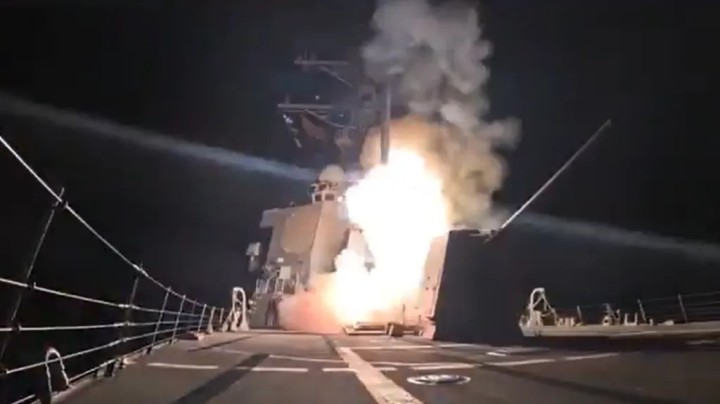
dramatic intervention in West Africa, the United States launched precision airstrikes against Islamic State (ISIS)
militants in Nigeria, signaling a sharp escalation in Washington’s
response to extremist violence that has devastated local communities.
U.S. President Donald
Trump, announcing the operation from Florida, said the strikes were
aimed at ISIS fighters who had been “viciously
killing innocent Christians”, calling the attacks “powerful and deadly”
and framing them as a moral response to escalating atrocities.
“If they did not stop the slaughter of Christians, there
would be hell to pay, and tonight, there was.” Trump said.
What Happened inside the Christmas Night Operation?
According to U.S. Africa Command (AFRICOM), multiple precision airstrikes were carried
out against ISIS-linked camps in Sokoto State, a remote region near
Nigeria’s border with Niger. The operation followed weeks of intelligence
gathering and coordination with Nigerian security forces.
Key details include:
The
airstrikes come amid worsening
insecurity across northern Nigeria, where ISIS-linked factions and other
armed groups have expanded their reach beyond traditional conflict zones.
Throughout 2025, the region has witnessed repeated attacks on civilians,
including raids on villages, church burnings, kidnappings, and mass
displacement.
While
Nigeria’s violence is rooted in a complex mix of factors such as banditry,
ethnic tensions, land disputes, and weak governance; security officials say
ISIS-affiliated groups have increasingly carried out ideologically driven attacks, exploiting instability to establish
new footholds in the northwest.
U.S. officials stressed that the strikes were surgical, aimed at degrading command centers, weapons storage sites, and militant hideouts that had been used to plan attacks on villages and places of worship.
Why the U.S. Acted Now?
The strikes come after months of escalating violence in Nigeria, particularly in the
north and northwest, where extremist groups have exploited weak security,
poverty, and long-standing ethnic tensions.
In 2025 alone, thousands of civilians have been killed
across Nigeria in militant attacks, not just that churches, schools, and
villages have been burned. Entire communities have been displaced, forcing
families into camps with little food or protection
U.S. officials emphasized
that the strikes were targeted counterterrorism
actions, not part of
a broader ground operation, and were carried out at the request of Nigerian
security partners.
The Human Story: Lives Lived in Fear
For people on the ground, the strikes were more than
geopolitics, they were personal. In displacement camps near Sokoto, families
describe years of terror. Villagers recount fleeing at night as gunmen arrived
on motorcycles, churches reduced to ashes and children forced to watch loved
ones killed.
Human rights groups say Nigeria remains one of the deadliest countries in the world for religious minorities, though they caution that violence also affects Muslim communities and is fueled by broader social collapse.
How is Nigeria Responding?
Nigeria’s government confirmed ongoing security cooperation with the United States,
stating that the operation aligned with joint counterterrorism efforts and
respected Nigeria’s sovereignty. The state remains committed to protecting both
Christians and Muslims. Foreign support and military action is necessary but long-term peace
requires local solutions.
President Bola Tinubu has
previously acknowledged that while extremist violence includes religious
elements, it is also fueled by economic hardship, criminal networks, and
climate-related pressures affecting livelihoods in northern regions.
Global Reactions?
Support and Praise: Christian advocacy groups worldwide welcomed the strikes
as overdue protection for persecuted communities. Several U.S. lawmakers
praised the action as decisive leadership.
Some Western officials and international security analysts’
sees the action as a necessary step to weaken ISIS networks in Africa.
Caution from Human Rights Groups: International organizations urged
transparency and independent monitoring. Concerns were raised about potential
retaliation and civilian safety
Regional and International Concerns: The African Union and UN
emphasized the need for political solutions alongside military action. African
policy experts warned that military action alone cannot resolve Nigeria’s
deep-rooted security crisis without parallel investment. It could fuel anti-Western sentiment if
not paired with development and reconciliation.
What This Means for Africa and the World ?
The operation underscores
strengthening U.S.–Nigeria security ties and signals Washington’s willingness
to intervene directly when extremist threats escalate. The airstrikes marks a rare direct U.S. combat role in West Africa
as it signal that ISIS expansion in Africa is now a global security priority. This is a reminder that
terrorism’s center of gravity has shifted beyond the Middle East.
A Moment of Hope and Uncertainty
As smoke cleared over the targeted camps, families in nearby
villages dared to hope quietly that the night marked a turning point. Yet fear
remains and peace is fragile.
This Christmas night intervention has become a symbol of a
world struggling to balance faith,
force, and human dignity. Whether it leads to lasting safety or further
escalation will depend on what comes next not just from the skies but from the
ground.
For official updates and statements:
U.S.
Africa Command:
https://www.africom.mil
U.S.
Department of State – Nigeria: https://www.state.gov/countries-areas/nigeria/
Nigerian
Government Statements:
https://www.gov.ng