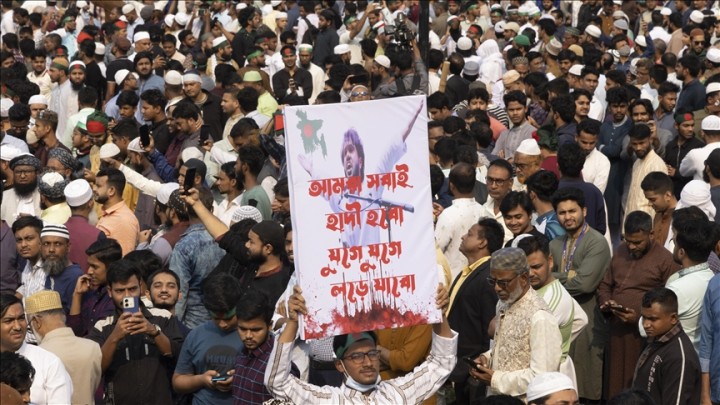
Dhaka, Bangladesh | December 22,
2025
Bangladesh has been gripped by widespread violence, protests and political
uncertainty following the assassination of prominent youth leader Sharif Osman Bin Hadi, a key figure in
last year’s student-led uprising that ended the long rule of former Prime
Minister Sheikh Hasina.
Hadi, succumbed to his injuries on December 18 which was six days after
being shot in the head by masked
assailants in Dhaka while leaving a mosque. His death has triggered one
of the most volatile periods. Bangladesh has seen the change of government,
raising serious concerns about the country’s fragile transition toward democratic elections scheduled for
February 2026.
Who
Was Sharif Osman Hadi?
Hadi was the spokesperson of Inquilab Mancha (Platform for Revolution)
and a powerful voice among youth and student movements. He rose to national
prominence during the 2024/25 protests that forced Sheikh Hasina from power. He
was known for his sharp criticism of authoritarian rule and Bangladesh’s
strained relations with India. Hadi had recently begun campaigning ahead of the
upcoming parliamentary elections. Many supporters viewed him as the symbol of a new political generation.
Timeline
of the Crisis
·
December 12: Hadi is shot in Dhaka while leaving a mosque.
·
December 15: He is airlifted to Singapore for advanced medical
treatment.
·
December 18: Hadi dies from his injuries.
·
December 19: Protests erupt across Dhaka and other major cities.
· December
19–20: Violence spreads nationwide,
including arson attacks, media office burnings, and diplomatic tensions.
· December 20: Hadi’s body returns to Dhaka; tens of thousands attend his
funeral at the National Parliament complex.
Violence,
Media Attacks and Anti-India Protests
1.
Protesters torched the offices of
leading newspapers Prothom Alo and The Daily Star, accusing them of
pro-India bias. Journalists were trapped inside burning buildings, sparking
outrage among media rights groups.
2.
Major intersections, including Shahbagh
Square were blocked by students and activists chanting demands for justice.
3.
In Chittagong, protesters
attacked the Indian Assistant High Commission, intensifying diplomatic
tensions.
4.
Cultural institutions, political
buildings, and historic sites were vandalized.
5.
Journalists and editors reported
harassment and physical assaults.
6.
A separate lynching incident in
Mymensingh further heightened fear and instability.
Government
Response and Security Clampdown
The interim government led by Nobel
Peace Prize laureate Muhammad Yunus condemned the violence while calling
Hadi a “martyr of democratic struggle.”
Authorities have deployed army
units and paramilitary forces nationwide. They have announced a national
day of mourning with flags flown at half-mast and have launched a manhunt,
offering a 5 million taka reward for information leading to the arrest
of the killers.
The assassination has drawn strong global concern:
As Bangladesh moves toward its first
national election since Hasina’s fall, the killing of Sharif Osman Hadi has exposed deep political fault lines.
With protests ongoing and emotions running high, the coming weeks will be
crucial in determining whether the country can restore calm or slide further
into instability.