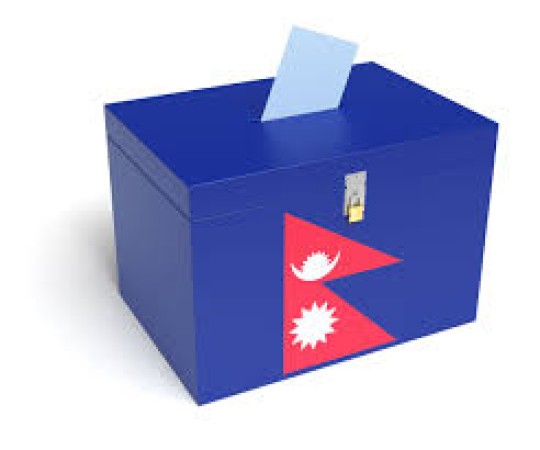
With just 41 days to go until Nepal’s highly
anticipated general election on March 5, 2026, the country’s
political landscape is buzzing with activity as parties register candidates,
campaign strategies take shape and national leaders make their pitches to
voters ahead of what could be one of the most consequential polls in recent
history.
The House of Representatives (HoR) election,
called after months of political turmoil and mass protests in 2025, has put
Nepal’s young democracy firmly in the spotlight, with millions of eligible
voters poised to shape the country’s future direction.
The roadmap to the March election was set
after parliament
was dissolved in September 2025 following widespread anti-government protests that culminated in
the resignation of former Prime Minister K.P. Sharma Oli. An interim
government, led by Sushila Karki Nepal’s first woman prime minister was formed
and tasked with steering the nation toward elections and restoring political
stability.
The Election Commission of Nepal (ECN) approved a detailed schedule for the
election, with nomination filing in January 2026, campaigning allowed
from mid-February
to early March, and polls set from 7 a.m. to 5 p.m. on March 5.
The ECN has also taken steps to improve voter participation, adding 168 new polling stations
and updating millions of eligible voters to the rolls.
In the final voter list, nearly 18.9 million
Nepali
are eligible to cast their ballots, including a large number of young and
first-time voters, making youth engagement a potential game-changer in this
election.
The election has attracted a broad spectrum of
political actors, with 68 parties and thousands of
candidates contesting seats in the direct First-Past-The-Post (FPTP) race. This
includes major national parties, regional groups and new political outfits
formed in the wake of last year’s Gen-Z protests.
Among key developments:
·
Advocates and
local leaders are filing nominations across constituencies, such as Advocate Swagat Nepal from
the Rastriya Prajatantra Party (RPP) in Jhapa-2.
·
Veteran party
figures and newcomers alike are submitting candidacies, including Binod Lama a transgender
candidate in Kavre-1 and national leaders from the Nepali Congress and
Communist Party of Nepal (NCP).
·
Independent
leaders and social activists who emerged from protests are also throwing their
hats into the ring, reflecting a more vibrant and diverse political
competition.
The competition for seats has sparked intense
grassroots campaigning and early strategic alliances as parties seek to broaden
their reach across urban and rural constituencies.
Nepal’s major traditional parties are
navigating internal tensions as they prepare for the elections. The Nepali Congress,
long viewed as a central force in Nepali politics, has experienced divisions,
with one faction of the party being denied its registration by the ECN a move
that could ripple into election dynamics.
Meanwhile, veteran leaders like Madhav Kumar Nepal of the
Nepal Communist Party have asserted that public support is building for their platforms,
suggesting confidence among older party bases.
In the capital, prominent local leaders such
as “Balen” Shah the former mayor of Kathmandu resigned from his mayoral post to
focus full time on national politics, tapping into youthful energy and
signaling a trend of local leaders entering the national political stage.
A unique feature of this election is the mobilisation of young
voters, many of whom were active in the 2025 Gen-Z protests
that helped topple the previous government over corruption and restrictions on
freedom of expression. That movement has significantly altered political
narratives, with youth engagement now a central theme of campaign speeches and
party manifestos.
Activists and young voters alike are urging
their peers to translate protest energy into electoral participation, framing
the upcoming election as a chance to demand accountability, economic
opportunity, and political reform.
As the election approaches, several critical
issues are shaping voter expectations and party platforms:
·
Corruption and political
accountability remain top
priorities after last year’s upheaval.
·
Economic opportunities and jobs particularly for young graduates and migrant workers are
dominating public debates.
·
Healthcare, infrastructure and
climate resilience especially
given Nepal’s vulnerability to natural disasters are increasingly central
policy concerns.
·
Federal governance and representation are shaping dialogues on inclusion and regional
development.
The ECN has implemented measures to ensure a free, fair and secure
election environment. Alongside improved polling logistics, the
Interim Government has deployed an Integrated Election Security Plan
to safeguard the process and minimize intimidation or disruption.)
As Nepal prepares for the March 5 polls, the
combination of a broad electorate, high youth participation and competitive
party dynamics suggests a potentially transformative election which could
redefine the country’s political order after years of volatility.