Washington / Caracas
In a dramatic and unprecedented military operation,
the United States has carried out large-scale strikes inside Venezuela and
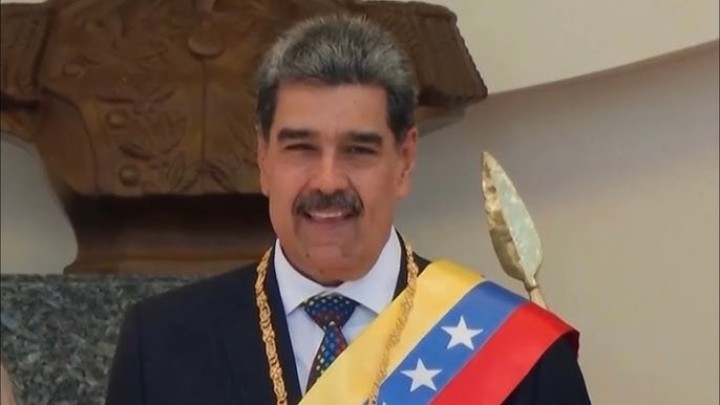
captured President Nicolás Maduro along
with his wife this early Saturday morning, in what is being described as one of
the most significant U.S. military actions in Latin America in decades.
The operation, codenamed “Operation Absolute
Resolve,” began before dawn with coordinated air and ground strikes across
key military and governmental locations in Venezuela’s capital, Caracas and surrounding areas. Within hours,
U.S. forces reportedly detained Maduro and first lady Cilia Flores
and transported them out of the country.
A High-Risk Mission with Global Consequences
According to U.S. President Donald Trump,
the mission successfully removed Maduro from power. Trump announced that Maduro
and his wife would be taken to New York to face U.S. federal charges
related to drug trafficking and narco-terrorism, charges first
brought against him in 2020.
“We have completed a very powerful and successful
operation,” Trump declared, saying the U.S. would temporarily administer
Venezuela until a stable leadership transition could be
arranged. He also indicated plans to involve American oil companies in restoring
the nation’s oil industry.
Scenes of Conflict and Chaos in Caracas
Residents of Caracas reported explosions, low-flying
aircraft and power disruptions early Saturday, as the operation unfolded. Videos
circulating online showed plumes of smoke rising over the city and frightened
civilians seeking shelter. Communication outages added to the uncertainty.
Venezuela’s government immediately denounced the
operation as a “military aggression” and a violation of sovereignty,
declaring a state
of emergency. Vice
President Delcy
Rodríguez who was constitutionally elevated to acting president
after Maduro’s capturedemanded public confirmation of his condition and
whereabouts.
Impact on Venezuelans and the Region
The sudden shift in Venezuela’s leadership has sparked
fear, confusion and uncertainty among ordinary citizens. With power structures
disrupted and essential services at risk, many Venezuelans are bracing for
instability and hardship in the coming days. Regional governments are also on
alert, worried about refugee flows, economic disruption and spill-over tensions
across borders.
What will happen next?
Will Maduro face trial in the United States? How will
Venezuelan society respond to foreign military intervention? What political
leadership will replace him?
Experts say the operation could reshape geopolitical
relations in the Western Hemisphere and spark new debates over sovereignty,
legality, and national security.