New York / Tehran
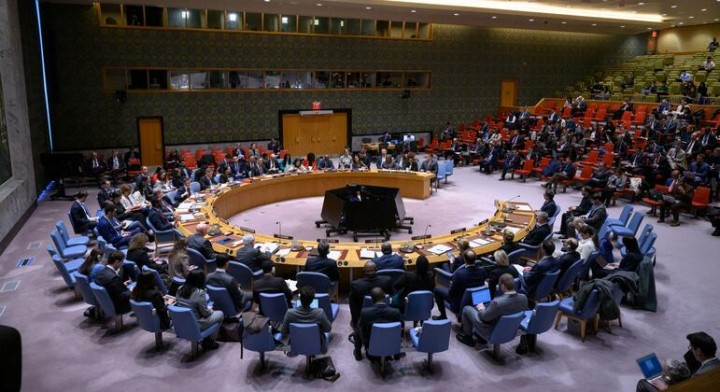
The United Nations Security Council
convened an emergency meeting this week to address the rising violence and mass casualties in Iran,
where widespread anti-government protests have resulted in thousands of deaths
and prompted international concern over human rights abuses and political
instability. The session was held at the request of the United States, drawing sharp divisions among world
powers and highlighting deepening global tensions over Tehran’s internal
crisis.
Global
Spotlight on Iran’s Unrest
Iran has been engulfed in one of its
most intense waves of public dissent in decades since late December 2025, when demonstrations erupted nationwide in
response to economic hardship, political frustration and declining living
standards. What began as protests over economic conditions quickly transformed
into broader calls for political change, with millions taking to the streets
across all 31 provinces.
Human rights organisations report
that more than 3,000 people have been
killed in the protests and ensuing crackdowns, including at least 2,885 demonstrators,
according to the U.S-based Human Rights Activists News Agency (HRANA). The
Iranian government does not provide independent figures, but activists say the
true toll may be significantly higher.
Security
Council Debate Highlights Divisions
At the UN meeting on Thursday, U.S. Ambassador to the United Nations Mike
Waltz urged stronger international attention to the situation and stated
that “all options are on the table” to pressure Iran to end its violent
repression of protesters. The United States has also condemned the widespread
use of lethal force by Iranian security forces.
In contrast, Iran’s Deputy Permanent Representative to the UN, Gholamhossein Darzi,
condemned what he described as attempts by foreign powers to “exploit peaceful
protests” for political purposes, rejecting external interference and
asserting that Iran would respond decisively to any acts of aggression.
Countries including Russia and China backed Iran’s criticism of
the US, warning against framing the Security Council debate as justification
for hostile actions. Other member states stressed the importance of
de-escalation and diplomatic solutions, with several urging restraint and respect
for Iran’s sovereignty.
Human
Rights and Communication Blackout
Human rights advocates have heavily
criticised Iran’s response, particularly the near-total internet shutdown imposed since early January, which has limited
outside access to information and hindered independent verification of events
on the ground. Critics say the blackout is being used to conceal the scale of
the crackdown and has obstructed efforts by families to locate missing loved
ones.
The Security Council meeting also
featured warnings from UN officials and rights groups about the use of lethal
force and the need to protect civilians. Assistant Secretary-General Martha
Pobee described the situation as “deeply concerning” and emphasised the importance
of avoiding further loss of life.
International
Reaction and Next Steps
Beyond the Security Council, a
coalition of human rights organisations has called for an emergency session of the UN Human Rights
Council to further investigate what they describe as “unlawful killings”
and to demand accountability for abuses.
As Iran remains largely isolated
from global information networks and its borders, the international community
is watching closely. The outcome of diplomatic efforts at the United Nations
may shape future international responses from sanctions and condemnation to
potential negotiations as pressure mounts for Iran to ease its violent
suppression of dissent.