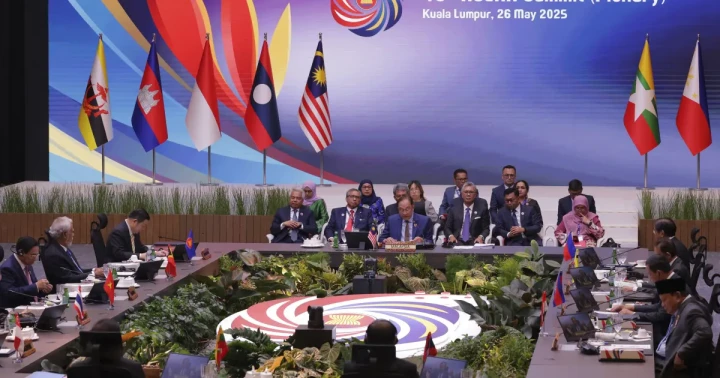
Kuala
Lumpur / Yangon
The Association of Southeast Asian Nations (ASEAN) has taken a firm position on
Myanmar’s controversial election, announcing that it will not send official
observers and will not certify the vote, according to Malaysia’s Foreign
Minister Mohamad Hasan. The move is a significant diplomatic stance from the
11-member regional bloc as Myanmar holds a three-stage general election amid
widespread conflict and international scrutiny.
At a summit in Kuala Lumpur, ministers from ASEAN
countries agreed that they could not endorse the ongoing polls in Myanmar,
which began in December 2025 and are being held amid a civil war following the military’s
2021 coup. The election has been widely criticized by the United Nations,
Western governments and rights groups as a bid by the military regime to legitimize its rule through proxy political
parties.
In the first two phases of the election held in
December and January, turnout has been low and the military-backed Union
Solidarity and Development Party (USDP) has dominated contested seats. Critics
argue the polls lack credibility given restrictions on opposition party
activity, the imprisonment of leaders like Aung San Suu Kyi, and heavy conflict
in many areas where voting has been difficult or impossible.
ASEAN’s decision not to send observers effectively
means the bloc will not formally
endorse the legitimacy of the process a diplomatic rebuke to the junta’s
efforts to portray the elections as a path to peace and stability. Some
individual member states may still choose to dispatch their own observers, but ASEAN
will not do so collectively.
The bloc’s stance reflects ongoing concerns about
violence and political repression. Despite calls from many ASEAN members for
dialogue and inclusive peace efforts, the conflict has persisted. Myanmar’s
civil war triggered by the coup that ousted the civilian government has killed
thousands and displaced many more. International rights groups have sharply
criticized the electoral process as being engineered to favour junta allies.
In addition to the election decision, ASEAN ministers
noted that the bloc is nearing completion of a long-delayed South China Sea
code of conduct with China, an agreement intended to reduce tensions in the
disputed maritime region shared by multiple member states. Progress toward this
pact has been slow since it was first pledged in 2002, but officials hope to
conclude it later in 2026.